
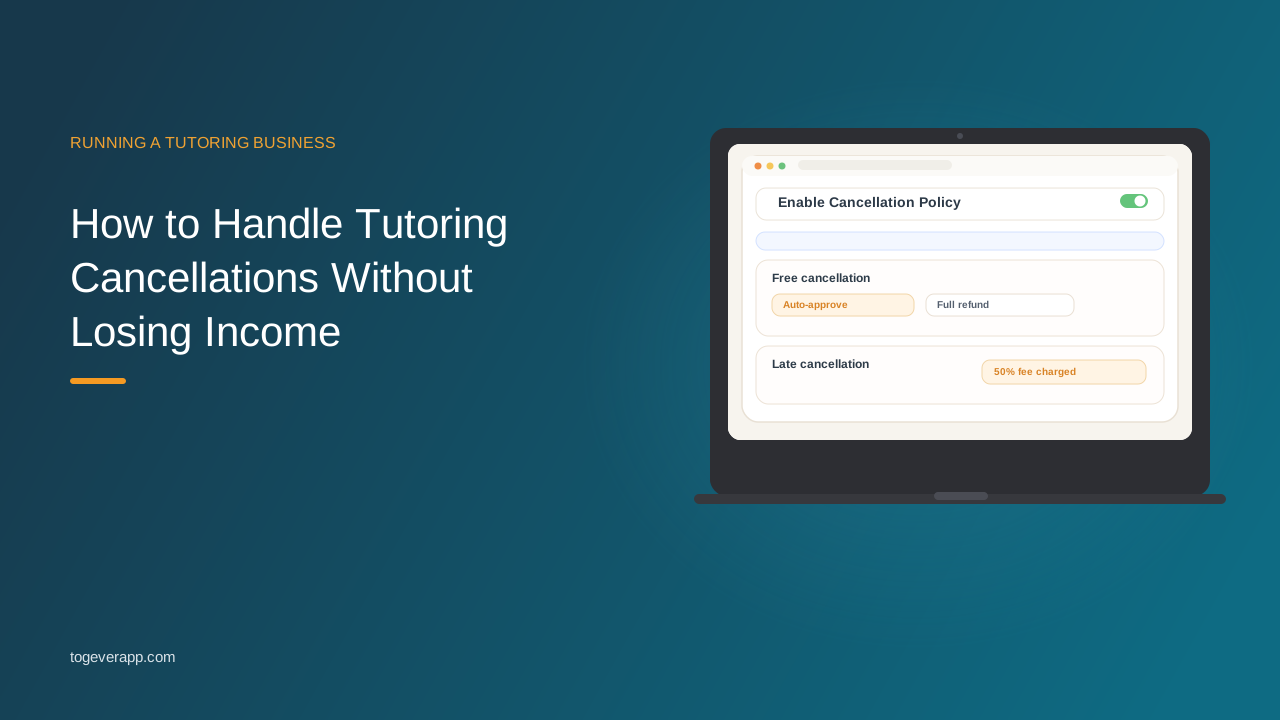
A Practical Guide for Independent Tutors
Cancellations are one of the fastest ways for a tutoring business to lose income, momentum, and confidence. One family cancels late, another asks to reschedule every other week, and suddenly your carefully planned timetable starts to feel unreliable. The answer is not to become rigid or unfriendly. It is to build a clear cancellation system that protects your time, keeps expectations professional, and still feels fair to families.
Why Cancellations Feel So Expensive
A cancelled lesson does not only mean one missed hour of teaching. It often means:
- Lost revenue from a slot you cannot refill at short notice
- Wasted preparation time
- Gaps in student progress and routine
- More admin spent rearranging sessions and updating invoices
If your business depends on weekly sessions, cancellation handling is not a small policy detail. It is part of how you protect income and keep your calendar stable.
What a Good Tutoring Cancellation Policy Actually Does
A strong policy should do four things:
- Set clear notice periods
- Explain what happens financially if a family cancels late
- Define how rescheduling works
- Give you a consistent script so you do not make case-by-case decisions under pressure
The goal is not to punish families. The goal is to remove ambiguity. Families know the rules in advance, and you do not have to renegotiate every time something changes.
Start With One Clear Rule
Most tutors overcomplicate this. Start with one simple baseline rule such as:
Sessions cancelled with less than 24 hours' notice are charged in full.
That single rule is easy to explain and easy to remember. You can add flexibility later for genuine emergencies or longer-term clients, but your default needs to be simple enough that you can apply it consistently.
Decide What Counts as a Cancellation Versus a Reschedule
This is where many policies break down. Families often think a reschedule is different from a cancellation. From a business point of view, it usually is not. If the original slot cannot be reused, your time has still been lost.
That means your policy should answer this clearly:
- Is a same-week move allowed if you have availability?
- Does a late reschedule count the same as a late cancellation?
- How many make-up lessons are allowed per term or month?
When this is not defined, rescheduling turns into an open-ended negotiation.
Choose a Model That Matches Your Business
There is no single correct structure. Common options include:
1. Strict notice policy
Example: less than 24 hours' notice means the full session fee is still payable. This works well if you rely on recurring weekly slots and rarely have time to refill cancellations.
2. Partial-fee policy
Example: 50% fee inside 24 hours, 100% fee for no-shows. This can feel more flexible, but it also adds more rules to explain and manage.
3. Prepaid credit model
Families buy credits or lesson blocks in advance. If they cancel inside your notice window, the credit is still used. This can reduce awkward payment conversations because the session was already paid for.
4. Limited make-up allowance
Example: one short-notice make-up lesson per term, after which standard cancellation rules apply. This works well if you want a humane exception without creating a free-for-all.
Write the Policy Families Actually Need to Read
A cancellation policy should be short, direct, and plain-English. If it is a page long, families will not absorb it. In practice, the essentials usually fit into a few bullets:
- How much notice is required
- What happens if notice is shorter than that
- Whether reschedules are treated differently
- How emergencies are handled
- How payment or credits are applied
A Simple Tutoring Cancellation Policy Template
Below is a practical starting point. Adapt it to your business model and pricing:
Lessons cancelled or rescheduled with at least 24 hours' notice can be moved without charge, subject to availability. Lessons cancelled or rescheduled with less than 24 hours' notice are charged in full. No-shows are charged in full. In exceptional circumstances, I may waive the fee at my discretion. Any make-up session must be booked within the same calendar month.
This is not legal advice, but it is a clean operational starting point for most independent tutors.
Where Tutors Usually Go Wrong
- Explaining the policy only after the first cancellation happens
- Making exceptions every time and training families not to take the policy seriously
- Having one policy in writing and another in practice
- Keeping cancellations in messages, but invoices in a separate system
The issue is rarely the policy itself. It is inconsistency.
Put the Policy Into Your Workflow, Not Just Your Terms
The policy works best when your systems reinforce it. That means:
- Families see the rule before booking
- Confirmed sessions are visible in one calendar
- Cancellations update invoices or credits automatically
- Parents can view upcoming sessions and changes without chasing you
This is where operations software matters. If your calendar, messages, and payments are disconnected, enforcing a policy becomes manual. If you are comparing tools, the Togever compare page shows how platforms differ on booking, parent access, and payment workflows.
Use Scripts So You Do Not Rewrite the Same Message Every Time
A short script makes policy enforcement faster and less emotional. For example:
Thanks for letting me know. Because this change is within the 24-hour notice window, the session is still chargeable under my cancellation policy. If I have another slot available this week, I'm happy to offer it.
That message is calm, professional, and consistent. No apology spiral. No improvised negotiation.
How to Introduce the Policy Without Sounding Harsh
Many tutors avoid firm policies because they worry it will put parents off. In reality, clear boundaries usually increase trust. Position the policy as part of running a reliable service:
- It protects reserved weekly slots
- It helps you plan fairly for all families
- It keeps teaching time and admin predictable
Families are used to cancellation policies in other professional services. The problem is usually not the existence of the rule. It is surprise.
What If You Are Still Getting Too Many Cancellations?
If late changes continue even with a written policy, you may need to tighten the structure around your sessions:
- Move to prepaid lesson blocks
- Reduce the number of ad-hoc bookings
- Offer recurring slots instead of week-by-week arrangements
- Limit the number of make-up sessions per client
In other words, treat repeated cancellations as a system design issue, not just a communication issue.
Final Thoughts
You do not protect income by hoping families will always be reasonable. You protect it by setting expectations clearly, applying them consistently, and building your booking and billing workflow around those rules. A strong tutoring cancellation policy makes your business feel more professional, your schedule more stable, and your income less fragile.
If you want a tutoring setup where sessions, parent visibility, and invoicing all work together, start a free trial of Togever or explore pricing.