
A Practical Guide for Independent Tutors
Many tutors know missed lessons hurt income, but still hesitate to charge for them. They worry about sounding harsh, losing goodwill, or driving a family away. The harder truth is this: if you reserve time, prepare for a lesson, and cannot refill the slot, the cost of a missed session is real. Charging for missed lessons is not about being inflexible. It is about treating your time as valuable and running your tutoring business professionally.
Why This Question Matters
One missed lesson is rarely the issue on its own. The problem is the pattern it creates. When families learn that short-notice changes carry no consequence, cancellations become easier to make and harder to control.
That leads to:
- Unpredictable weekly income
- Underused calendar space
- More admin spent rearranging sessions
- A business model built around exceptions instead of structure
Yes, Tutors Usually Should Charge
In most cases, yes. If a family cancels late enough that you cannot reuse the slot, charging is reasonable. Other professional services do the same: therapists, consultants, music teachers, and private clinics all protect booked time in similar ways.
Tutoring is no different. A missed lesson still uses up planning, scheduling, and reserved capacity. If you absorb that cost every time, you train your business to be financially fragile.
When Charging Makes the Most Sense
- When the cancellation happens inside your notice window
- When the session was part of a recurring weekly slot
- When you already prepared materials or adjusted your timetable
- When you cannot realistically refill the slot
These are not edge cases. They are the normal operating reality for most independent tutors.
When Tutors Sometimes Choose Not to Charge
There are still situations where waiving the fee can make sense:
- A genuine emergency
- A long-term client with an excellent attendance record
- A rare exception you are consciously choosing to make
The key word is consciously. A one-off act of discretion is very different from having no real policy at all.
What Families Usually Object To
Parents do not usually object because the rule exists. They object because it feels unexpected, inconsistent, or unexplained. That means the problem is often not the charge itself. It is how and when the policy was introduced.
If the first time a family hears about your cancellation terms is when you send an invoice, you have already made the conversation harder than it needs to be.
How to Make the Policy Feel Fair
To make charging feel fair, define the rules in advance:
- State the notice period clearly
- Explain whether reschedules are treated the same as cancellations
- Decide how no-shows are handled
- Be clear about any discretionary exceptions
The more predictable the rule, the less personal the conversation becomes.
A Useful Way to Frame It
Instead of saying, “I charge because otherwise I lose money,” frame the rule around reserved time:
I reserve this slot for your child each week, so late cancellations are still chargeable because that time cannot usually be offered elsewhere at short notice.
That wording is calm, factual, and professional. It explains the rule without sounding defensive.
Should You Charge in Full or Partially?
There are three common approaches:
1. Full fee for late cancellations
The simplest option. Easy to communicate and easy to enforce.
2. Partial fee
Feels softer, but adds complexity. Families may still expect exceptions, and you still lose part of the slot value.
3. Prepaid credit used automatically
This can be the cleanest option operationally. Rather than chasing a missed-lesson fee afterward, the booked lesson simply uses one prepaid credit.
What Happens If You Never Charge?
If you never charge for missed lessons, you effectively insure the family's schedule using your own income. That may feel generous, but it creates three long-term problems:
- Revenue becomes harder to predict
- Your time is treated as flexible by default
- Reliable families indirectly subsidise unreliable ones
Put the Rule Into Your Systems
A missed-lesson policy is much easier to enforce when your systems support it. Ideally:
- Sessions are visible in one calendar
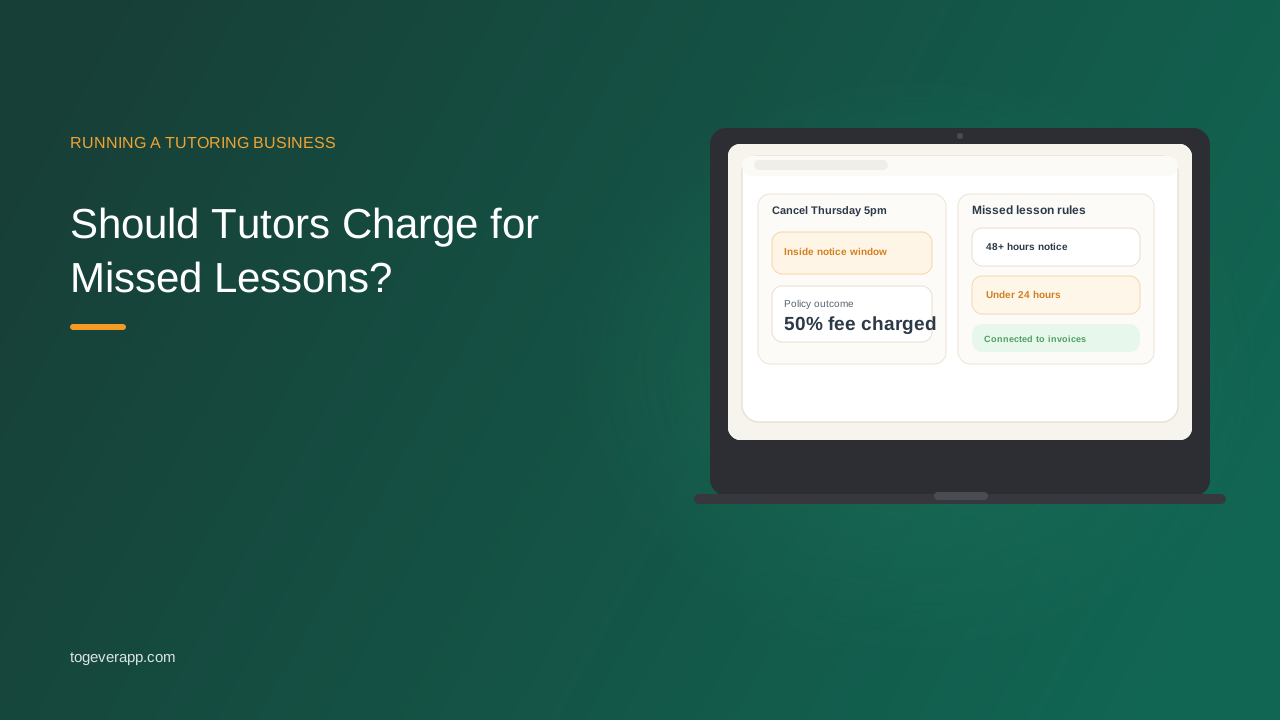
- Cancellations update invoices or prepaid balances automatically
- Parents can see bookings and changes without messaging you separately
This is where tutoring operations software matters. If your booking, parent communication, and billing are all disconnected, even a sensible policy becomes messy to run in practice.
How to Say It in a Real Message
Thanks for letting me know. Because the session was cancelled inside my 24-hour notice window, it is still chargeable under my missed-lesson policy. If I have another space available this week, I'm happy to offer it as a make-up slot.
Notice what this does: it stays polite, refers to an existing policy, and offers help without abandoning the boundary.
Link It to a Full Cancellation Policy
Charging for missed lessons should not exist as a random one-line rule. It needs to sit inside a broader cancellation framework that covers notice, reschedules, and no-shows. If you need a structure for that, read How to Handle Tutoring Cancellations Without Losing Income.
Final Thoughts
Tutors should usually charge for missed lessons when the slot was reserved and the cancellation came too late to replace it. That is not unfair. It is a normal part of running a professional service. The important thing is to make the rule clear, communicate it early, and apply it consistently.
If you want your bookings, parent communication, and invoicing to stay in one workflow instead of across multiple tools, start a free trial of Togever or visit the pricing page.